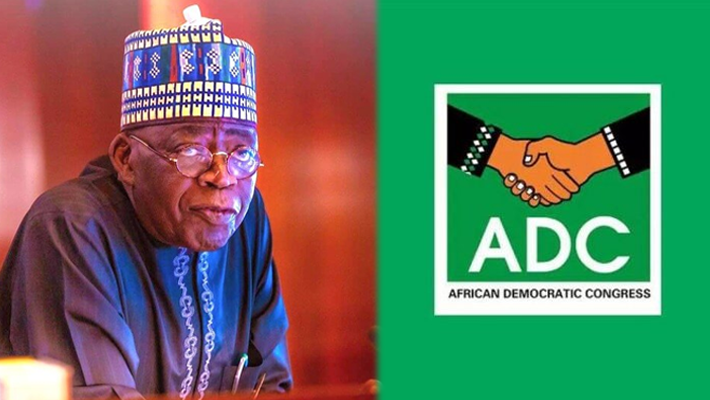
The controversy over the EFCC Osun State Accounts has taken a fresh twist after the African Democratic Congress (ADC) questioned President Bola Ahmed Tinubu’s directive ordering the Economic and Financial Crimes Commission (EFCC) to lift the restriction placed on Osun State Government accounts.
The opposition party welcomed the President’s decision to stop the account restriction. However, it challenged his repeated claim that a court had authorized the action. According to the ADC, the EFCC never mentioned any court order when it first defended its decision.
President Tinubu announced on Thursday that he had directed the EFCC to discontinue every action against the Osun State Government. He also instructed the anti-graft agency to approach the court and vacate the alleged order that allowed the freezing of the accounts.
The President admitted that he felt personally embarrassed by the development. He argued that the timing of the restriction created unnecessary political tension ahead of the upcoming Osun State governorship election. Tinubu stressed that no federal agency should create the impression that it is interfering in the democratic process.
Reacting to the President’s statement, the ADC said it found one issue particularly confusing. The party noted that the EFCC consistently defended its action by citing its statutory powers and preventive mandate. At no time did the commission inform Nigerians that it acted on the strength of a court order.
In a statement signed by its National Publicity Secretary, Bolaji Abdullahi, the ADC asked a direct question. It demanded that both the Presidency and the EFCC identify the court that allegedly approved the freezing of the Osun State Government accounts.
The opposition party insisted that the President’s explanation created more questions than answers. It argued that Nigerians deserve to know where the information about the alleged court order originated because the EFCC’s earlier public statements made no reference to any judicial approval.
The ADC also raised concerns about the independence of the anti-graft agency. The party argued that if the President could direct the EFCC to withdraw a court case because of possible political consequences, then the commission could no longer claim complete operational independence.
According to the party, the President’s directive appears to contradict repeated assurances that the EFCC makes its operational decisions without political influence. The ADC argued that such intervention weakens public confidence in the agency’s independence.
The opposition party also questioned the manner in which the directive was announced. It described it as unusual because President Tinubu personally signed the statement instead of allowing the Presidency’s regular communication channels to handle the announcement.
The ADC further claimed that widespread criticism from political parties, civil society organizations, and many Nigerians forced the reversal of the EFCC Osun State Accounts decision. The party rejected the suggestion that the change resulted only from concern about democratic fairness.
According to the ADC, public outrage played the biggest role in convincing the Federal Government to reverse the restriction. The party maintained that many Nigerians viewed the freezing of the state’s accounts as an abuse of power capable of influencing the outcome of the Osun governorship election.
Beyond the EFCC Osun State Accounts controversy, the ADC urged President Tinubu to intervene in another legal matter. The party called on him to direct the Independent Corrupt Practices and Other Related Offences Commission (ICPC) to stop opposing the bail application of former Kaduna State Governor Nasir El-Rufai.
As political reactions continue, the EFCC Osun State Accounts dispute remains a major national issue. The opposition insists that Nigerians deserve a clear explanation about the alleged court order, while many observers continue to debate the balance between executive authority, judicial oversight, and the operational independence of anti-corruption agencies.


