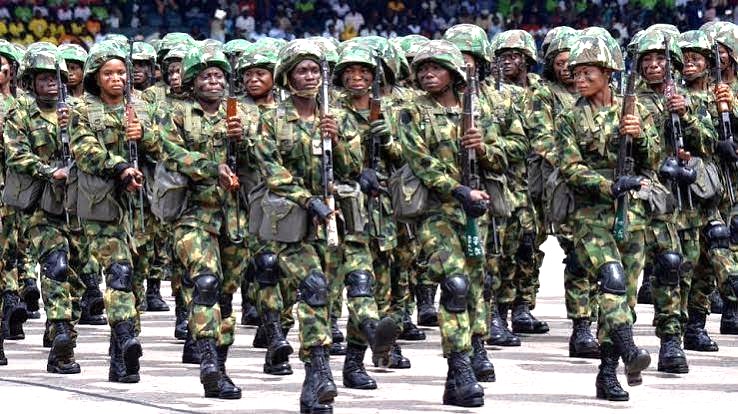
The Nigerian Army is facing a recruitment challenge in the South-East. South-East youths are showing less interest in joining the military, even as recruitment slots remain available.
The issue has sparked a fresh debate about patriotism, security, trust and national inclusion.
Last month, Chief of Army Staff, Lieutenant General Waidi Shaibu, raised concerns over the low enlistment of young people from the region.
He spoke during the passing-out parade of the pioneer batch of 90 regular recruits at the Nigerian Army Recruit Training Depot in Amasiri-Edda, Ebonyi State.
According to Shaibu, the recruitment quota for the South-East has remained largely unfilled for several years.
He urged traditional rulers, parents, community leaders and other stakeholders to encourage eligible young people to consider military service.
Shaibu described the Army as more than a career. He called it an avenue for patriotism, leadership and national service.
“For some time now, the recruitment quota allocated to this zone has not been fully utilised. This should not continue.”
The Army Chief also appealed to the people of the South-East to see the training depot as their own.
However, the response from the region shows that the issue is more complicated than a simple lack of patriotism.
Why are South-East youths reluctant to join the Army?
Conversations with young people from the region reveal several reasons for their reluctance.
Some fear being deployed to dangerous areas. Others question military welfare and career opportunities.
There are also concerns about discrimination, political interference and trust in security institutions.
For some South-East youths, the problem is therefore not a rejection of Nigeria. Instead, it is a question of confidence in the institution.
Orji Kalu: “Nobody wants to join”
Former Abia State Governor and Senator Orji Uzor Kalu has also spoken about the issue.
During an interview with News Central TV, Kalu said people in his area were often given recruitment forms for the Army, Police and Air Force.
According to him, many people still refuse to apply.
“I know in my area, they give me forms for people to join the Army; nobody wants to join.”
Kalu argued that Nigerians must see themselves as citizens of one country.
He also linked some of the country’s security problems to tribalism, religious divisions and hatred.
Furthermore, he described the armed forces as some of Nigeria’s strongest institutions.
Joe Igbokwe warns of future consequences
APC chieftain Joe Igbokwe has also expressed concern.
He warned that the South-East could regret the low level of participation in military recruitment.
Igbokwe reacted to reports that some recruitment slots allocated to the region remain unfilled.
Meanwhile, applicants from other parts of the country continue to compete for available positions.
“South-East will regret rejecting Nigerian Army recruitment, mark my words,” he said.
His comments have added to the debate over why young people in the region are not taking up military opportunities.
Aloy Ejimakor: “It is a question of trust”
Human rights lawyer Aloy Ejimakor offered a different explanation.
He argued that the reluctance of South-East youths should not automatically be interpreted as cowardice or a lack of patriotism.
Instead, he said it reflects deep mistrust of the military among some people in the region.
Ejimakor pointed to historical experiences involving the Nigerian military and the Igbo population.
He also referenced reported military operations against people suspected of supporting the Indigenous People of Biafra, IPOB.
According to him, these experiences have contributed to a lasting sense of distrust.
He further criticised the reported integration of former Boko Haram members into security structures.
Ejimakor argued that asking young people to serve under a system they distrust could create a serious conflict of confidence.
His position is that recruitment will remain difficult until the government addresses these concerns.
“I don’t want to die for politicians”
For some South-East youths, the biggest concern is personal safety.
Chinedu Udemmezue, a trader from Anambra State, said he once wanted to join the Army.
However, he changed his mind after considering the risks faced by soldiers.
“I have nothing against the Nigerian Army. In fact, when I was younger, I wanted to join. But today, I am no longer interested.”
Udemmezue said he worries about soldiers being sent into dangerous areas without enough equipment or support.
He also questioned whether the government adequately protects military personnel.
“I don’t want to enter the Army and become a casualty of a war that politicians are not serious about ending.”
For him, military service must come with confidence that the lives of soldiers matter.
“There is a trust problem”
Ifeanyi Nwankwo, a graduate from Enugu State, identified trust as another major issue.
He said some young people believe opportunities and promotions are not always based on merit.
That perception, he argued, can discourage potential recruits.
“You cannot tell young people to join an organisation when they believe that opportunities and promotions are not always based on merit.”
Nwankwo said the government must address such concerns instead of simply announcing new recruitment exercises.
He believes transparency could help restore confidence among South-East youths.
“I want to join, but my parents are afraid”
Not every young person in the region rejects military service.
Chukwuebuka Eze, an undergraduate at Enugu State University of Science and Technology, said he wants to join the Army.
However, his parents oppose the idea.
Their main concern, he said, is insecurity.
“I actually want to join the Army. I have always admired the military. But my parents are against it because of insecurity.”
His experience shows that recruitment decisions are sometimes influenced by family concerns.
Young people may be interested in military careers. Yet, parents may discourage them because of the risks involved.
Poor welfare is another concern
Uche Madu, a 27-year-old mechanic from Imo State, said welfare influenced his decision not to join.
He said he considered military service after secondary school.
However, he eventually chose another career path.
Madu said potential recruits want to know what happens to soldiers and their families when they are injured or killed.
He also mentioned salaries, insurance, housing and healthcare.
“If the salary, insurance, housing, healthcare and welfare are attractive, you will see more young people applying.”
For him, the military must compete with other career options.
Young people can choose business, skilled trades, technology or opportunities abroad. Therefore, military service must offer clear benefits.
Political interference raises questions
Obinna Onwe, a 29-year-old civil servant from Ebonyi State, pointed to another concern.
He said alleged political interference could damage confidence in the military.
According to him, young people want the armed forces to remain professional and focused on national security.
“The military should be a professional institution that serves Nigeria, not politicians.”
Onwe said perceptions about political involvement can influence recruitment.
He believes the government should rebuild confidence through institutional reforms.
Some South-East youths still want to serve
Despite the concerns, not all South-East youths are turning away from the military.
Kelechi Ugwu, a 23-year-old undergraduate from Enugu State, said he applied for Army recruitment.
He wants to serve the country.
“I think it is wrong to say South-East youths have given up on Nigeria.”
Ugwu acknowledged the concerns about insecurity.
However, he believes better working conditions could attract more applicants.
He also called for a transparent recruitment process.
In his view, young people will respond if they see soldiers being respected, properly equipped and fairly treated.
“Government should ask questions, not blame us”
Onyemaechi Nwafor, a 25-year-old entrepreneur from Anambra State, believes the government needs to listen to young people.
He rejected the idea that low recruitment automatically means a lack of patriotism.
“Ask the youths why they are not coming. Don’t just sit in Abuja and say they are not patriotic.”
Nwafor identified several possible reasons for the low interest.
They include fear, perceived discrimination, distrust of recruitment and better opportunities outside the military.
He suggested that government officials should visit universities, communities and youth organisations.
They should also explain career opportunities and address concerns about military service.
Analyst calls for military reforms
Political analyst and communication expert Nduka Odo also believes the government needs to look beyond recruitment numbers.
Speaking with DAILY POST, Odo attributed the problem to several factors.
They include poor remuneration, difficult living conditions and concerns about the handling of insecurity.
According to him, the government should make military service more attractive instead of blaming the region.
Odo said many young people in the South-East are ambitious.
He argued that they often prefer careers and businesses that offer better financial opportunities.
“The remuneration for soldiers is poor. They would do better if they went into trading and other businesses.”
He also raised concerns about military barracks.
According to Odo, poor living conditions could discourage potential recruits.
He further questioned public confidence in the security system following attacks that have killed military personnel.
The NDA question
Odo also raised the issue of representation at the Nigerian Defence Academy, NDA.
He argued that the debate should not focus only on ordinary Army recruitment.
According to him, representation at institutions that produce future military officers also deserves attention.
He alleged that young people from the South-East face difficulties gaining admission into the NDA.
However, such claims require careful examination and evidence.
The wider point remains important: recruitment is only one part of military representation.
What can change the situation?
The debate suggests that increasing recruitment in the South-East will require more than publicity campaigns.
First, the government must improve confidence in military service.
Second, welfare for soldiers and their families needs to remain a priority.
Third, recruitment should be transparent and based on clear, publicly understood criteria.
The military can also engage directly with young people.
Universities, community groups and youth organisations could become part of that conversation.
Most importantly, the government must listen to the concerns raised by South-East youths.
The region’s low recruitment numbers have several possible explanations.
Some young people fear insecurity. Others worry about welfare or career progression.
Meanwhile, some remain interested in serving Nigeria but face opposition from their families.
Therefore, the debate should move beyond accusations of disloyalty.
If the government wants more South-East youths in the Nigerian Army, it must first understand why many are staying away.
The question is not simply why they are refusing to enlist.
It is also what the Nigerian Army and the government can do to make military service a trusted and attractive choice again.


