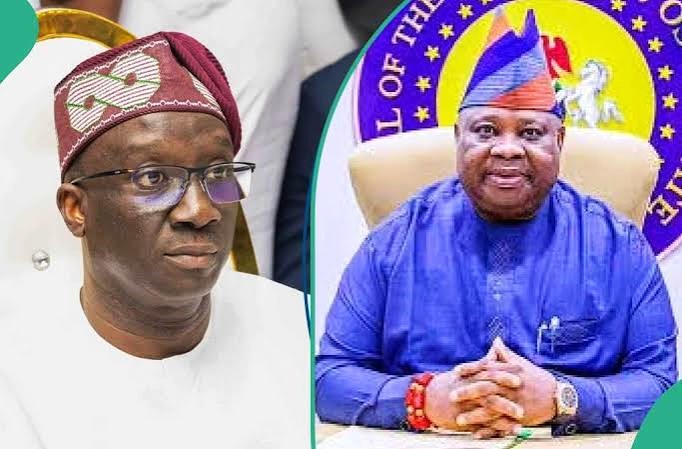
Okpebholo challenges Adeleke to show Osun his scorecard, shifting the debate from dancing and social media to governance, results and accountability.
The controversy surrounding Edo State Governor Senator Monday Okpebholo’s recent remarks in Osun State should not overshadow the bigger issue he raised: governance and accountability.
Okpebholo criticised Governor Ademola Adeleke’s public displays of dancing, content creation and entertainment. However, his argument was not that these activities are wrong. Instead, he questioned whether entertainment should take centre stage when citizens expect tangible results from government.
There is nothing wrong with dancing or content creation. In fact, Nigeria’s creative industry provides jobs, visibility and opportunities for thousands of young people. Yet governance is measured differently.
A governor can dance, create content and connect with citizens. Still, the bigger question remains: what has the government delivered?
That is where Okpebholo’s challenge to Adeleke becomes important.
Okpebholo raised questions about development in Osun and the use of public funds available to the state. As a sitting governor, he understands the scale of statutory allocations and other revenues received by state governments.
Therefore, his challenge is simple.
If substantial resources have come to Osun in recent years, where are the results?
What has changed in the lives of ordinary citizens? Which roads have been built or repaired? Which schools have been improved? Which hospitals have received meaningful upgrades?
Most importantly, what projects can Osun residents point to as evidence of effective governance?
These questions deserve answers.
Instead of turning the debate into a political quarrel, Adeleke can respond with his administration’s scorecard. He can show the people what has been achieved and where those achievements can be found.
That would be a stronger response than political attacks.
The best defence of any government is its record.
If the Adeleke administration has delivered major projects across Osun, the evidence should be clear. The government can present the locations, costs, beneficiaries and impact of those projects.
It can also highlight its achievements in education, healthcare, agriculture, youth empowerment, employment and infrastructure.
Indeed, every elected government should welcome this kind of scrutiny.
A government that has used public resources effectively should have little difficulty presenting its achievements. A strong scorecard can speak louder than political arguments.
That is why Okpebholo’s challenge to Adeleke should be treated as an accountability test rather than a personal dispute.
Interestingly, Okpebholo has placed himself under the same standard.
His message is that when the time comes for him to seek another mandate in Edo State, political leaders should also ask voters to examine his record.
That is how democracy should work.
The people should examine the roads constructed. They should assess government policies. They should examine spending and measure the impact of major projects.
If the results are good, voters can reward the government. If the results are poor, voters can demand change.
This approach is healthier than politics based on personality, social-media battles or celebrity appeal.
Nigeria needs political competition that focuses on results.
If one state builds better roads, other states should aim to do better. If one government improves schools, another should seek to surpass that achievement.
Likewise, if one administration creates opportunities for young people, others should be challenged to do more.
That kind of competition can transform Nigerian politics.
Instead of competing over who commands more attention online, politicians can compete over who delivers greater public value.
That is the real issue behind the Okpebholo-Adeleke debate
The opportunity is now before Governor Adeleke to answer his critics with facts, figures and results.
Rather than responding only with rhetoric or social-media exchanges, his administration can present a clear account of its stewardship.
Osun residents deserve to know what has been achieved with public resources. They also deserve to know what remains unfinished and what the government plans to do next.
For political observers, the debate has also opened a wider question about the direction of Osun State.
Should voters retain the status quo? Or should they choose a new administration that promises stronger accountability and more visible development?
Ultimately, the decision belongs to the people.
They will decide which candidate deserves their support based on performance, credibility and a clear plan for the future.
Okpebholo’s message is therefore bigger than dancing.
It is a call for governments to show their work.
For Osun, the real scorecard should be visible in better roads, stronger schools, improved healthcare, greater economic opportunities, productive agriculture and infrastructure that improves everyday life.
On Election Day, politicians may make promises. Social media may amplify the noise.
But the people of Osun will have the final say.